
How We Learn
At The Learning Tree Preschool, we believe children learn best through play, exploration, and meaningful experiences. Our approach is child-centred, allowing each child to follow their interests while being supported and guided by caring practitioners. We provide a rich, stimulating environment both indoors and outdoors, where children can explore, create, and discover at their own pace. Through a balance of adult-led and child-initiated activities, we support all areas of development, encouraging communication, problem-solving, and social skills. By observing and responding to each child’s needs, we ensure learning is engaging, inclusive, and tailored to help every child thrive

01
Expressive Arts & Design
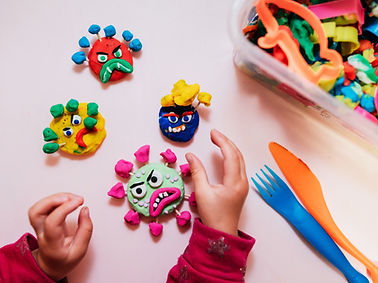
Imagination and creativity are explored and developed in the area of expressive arts. Your child will explore different media and materials and be encouraged to use their imagination in a range of different experiences.
02
Personal, Social & Emotional Development
One of the main aspects of your child’s time at nursery will be a focus on their personal, social and emotional development. They will be encouraged to develop positive relationships, to play with a variety of friends and to understand the feelings of others. There will be opportunities to build confidence and self-awareness, and also to manage their feelings and behaviour.

03
Understanding The World
Your child will learn about the world around them, looking at different occupations and growth and decay. They will be encouraged to use simple technology and equipment.
04
Communication & Language
Communication and Language is a prime area in the EYFS, critical for fostering brain development and literacy. It focuses on building high-quality, back-and-forth interactions to support listening, attention, understanding, and speaking. Key goals include using new vocabulary, expressing ideas, and conversing, underpinned by rich, language-focused environments


05
Mathamatics
At nursery, your child will be given many opportunities to explore numbers and shapes in their play. For example, they may be encouraged to count objects they are playing with and to compare two groups of objects. They will probably begin to represent numbers using their fingers, marks on paper or pictures.
06
Physical Development
Your child will be given lots of opportunities to move in different ways, for example, running, jumping, balancing and playing with balls. Another important aspect of physical development at this stage is learning to hold and use tools, such as scissors, and also to use pencils and pens to draw lines and shapes. Your child will also begin to understand how to look after themselves and be healthy.


07
Literacy Development
Literacy in the Early Years Foundation Stage (EYFS) focuses on developing language comprehension, word reading, and writing skills, anchored in a love for reading and strong oral language foundations. Key areas include phonics, storytelling, mark-making, and fostering a print-rich environment through play.